Sign 01
Cracks in walls, ceilings and brick
Brick veneer and drywall are brittle. When the slab under them bends even slightly, they are the first things to show it. They also crack for reasons that have nothing to do with the foundation, so the pattern matters more than the crack.
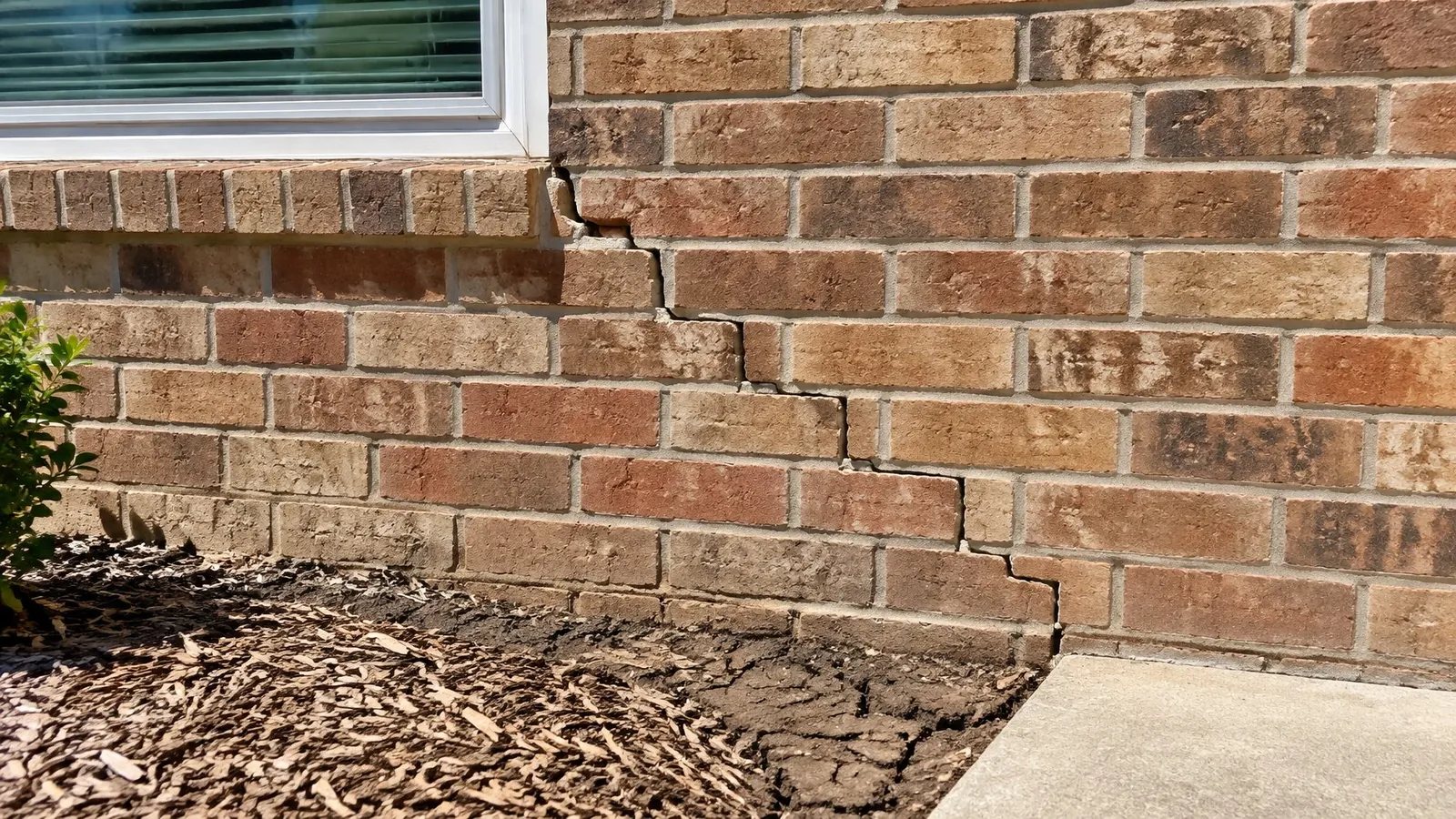
What it looks like
The cracks that make people pick up the phone
- Stair-step cracks in brick that follow the mortar joints, often starting at the corner of a window or the garage door.
- Diagonal cracks in drywall running up and away from the top corner of a door or window opening.
- A crack that is wider at one end. Describe the taper and show the inspector a photo; its shape alone does not establish the cause.
- Gaps at the trim: brick pulling away from a window frame, or the board under the eaves separating from the top of the wall.
- Ceiling cracks that run across the middle of a room, or along the joint where a wall meets the ceiling.
Note which way each crack leans and whether the two sides still sit flush. A step you can feel with a fingernail says more than a long, flat hairline.
Other causes
Cracks that are not the foundation
Lumber dries and shrinks during a new house's first few years, and drywall joints crack as it does. Thin straight cracks along a taped seam are usually that.
Brick over a wide garage door rests on a steel lintel. Rust and heat move the steel, and the brick above it cracks in a short stair-step that goes no further.
Texas engineers' own guidelines for evaluating residential foundations list cracked walls and veneer among the signs to weigh, and add that seeing some of them does not by itself mean the structure has a problem.
At the inspection
What a company checks
Where every crack is, drawn on a plan of the house, and which direction each one opens.
Whether the doors and windows near the cracks are still square, and how the floor elevations read along that wall.
What is happening in the soil outside that wall: a downspout, a flower bed that is watered daily, a tree, or bare ground that has pulled away from the slab.
If it is the foundation
What repair might involve
Where the soil has simply dried out on one side, a company may suggest fixing drainage and moisture first and watching the cracks for a season.
Where one part of the slab has settled and is not coming back, the usual answer is piers under that section so it rests on deeper ground.
In the meantime
Leave the patching for later
Filling and painting a crack hides the evidence an inspector needs, and the crack reopens if the cause is still there. Mortar and drywall repairs belong after the foundation question is settled.
A pencil mark at each end of a crack, with the date, shows within a few months whether it is still growing.
Foundation repair in Frisco and nearby
Describe the problem, book the inspection
This number is for foundation repair on houses. Say where the cracks are, which doors stick and how long it has been going on. If part of the house shifted all at once, there is a gas smell, or brickwork seems about to come down, clear the house and dial 911 or the gas utility before anything else.
Ready to have someone look at it?
Phone and say what you have noticed. The foundation repair company on the other end is independent of this site and takes on houses in your part of Collin or Denton County. Ask it for a time to come and inspect.
Call (972) 430-3959Your call may be recorded. Read how referrals are paid for and what happens to call details.